Pan-African Biennale Workshop, September 2026
Beauty, Public Architecture and The Hauntings of Empire
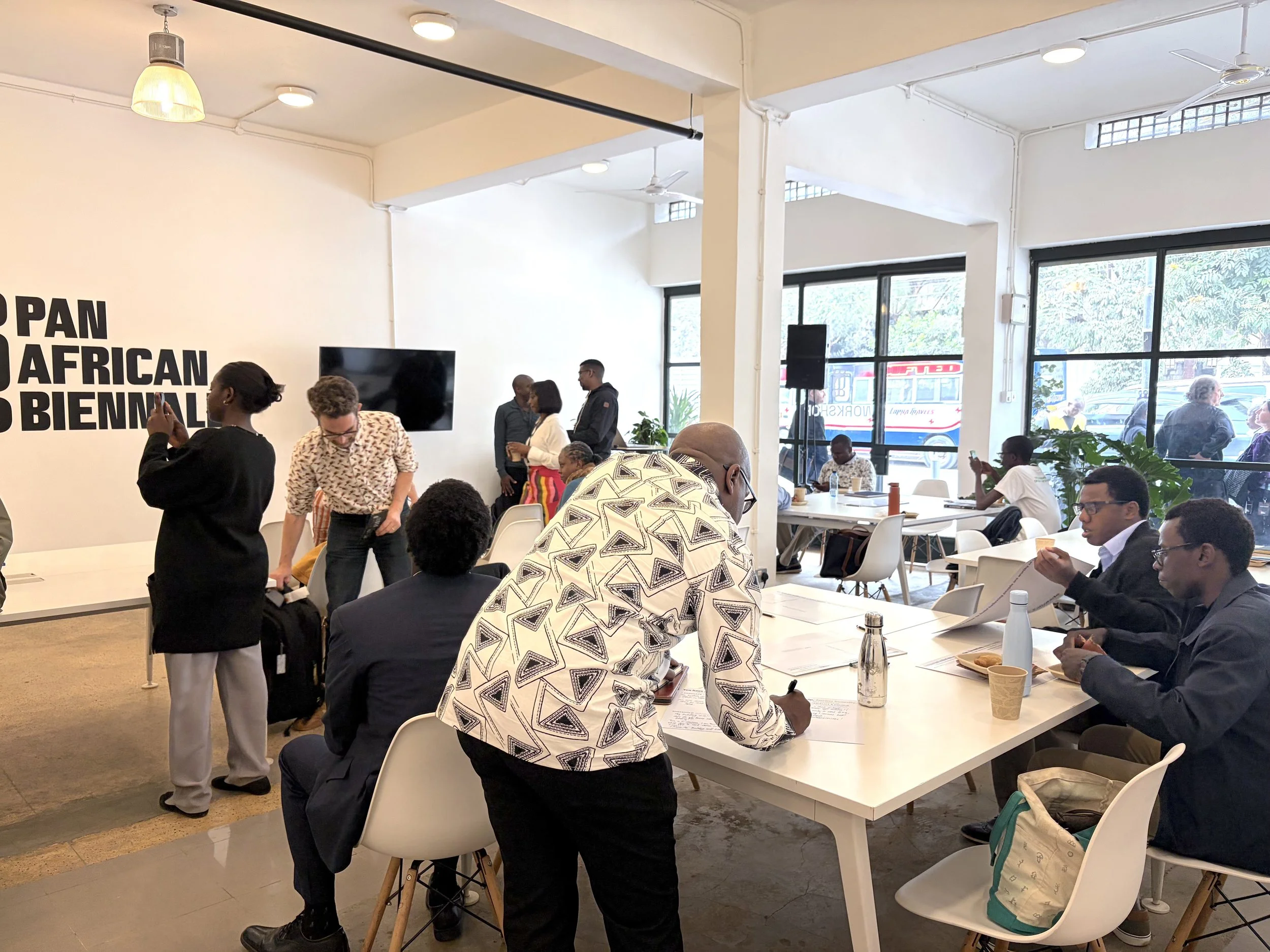
In September, as part of the Pan-African Biennale of Architecture, we held a workshop at Shah Houses that used the police station — the underdog of civic architecture — as a design experiment. The idea grew out of our work on the Kiambiu Community Centre and an interest in the relationship between public architecture, institutional power and human dignity.
The police station is a threshold between the citizen and the state, one we cross in some of the most vulnerable moments of our lives: seeking protection, reporting harm, giving testimony, being questioned or detained. Each of these encounters is extremely emotionally charged. Yet, these environments are often physically and psychologically hostile, poorly designed, neglected and inadequately maintained. What does this say about our relationship with the state, and consequently with ourselves? What does it mean that we accept these conditions precisely when we most need care, protection or justice?
In Kenya, these questions are inseparable from the history of policing. The police service was institutionalised under colonial rule, with policing used as an instrument of surveillance, subjugation and control of Africans. Some police buildings from that era, including former detention sites associated with the Mau Mau period, remain in use. Their physical and institutional legacies raise questions about how much of this inheritance has been reconsidered.
The architecture did not gain independence.
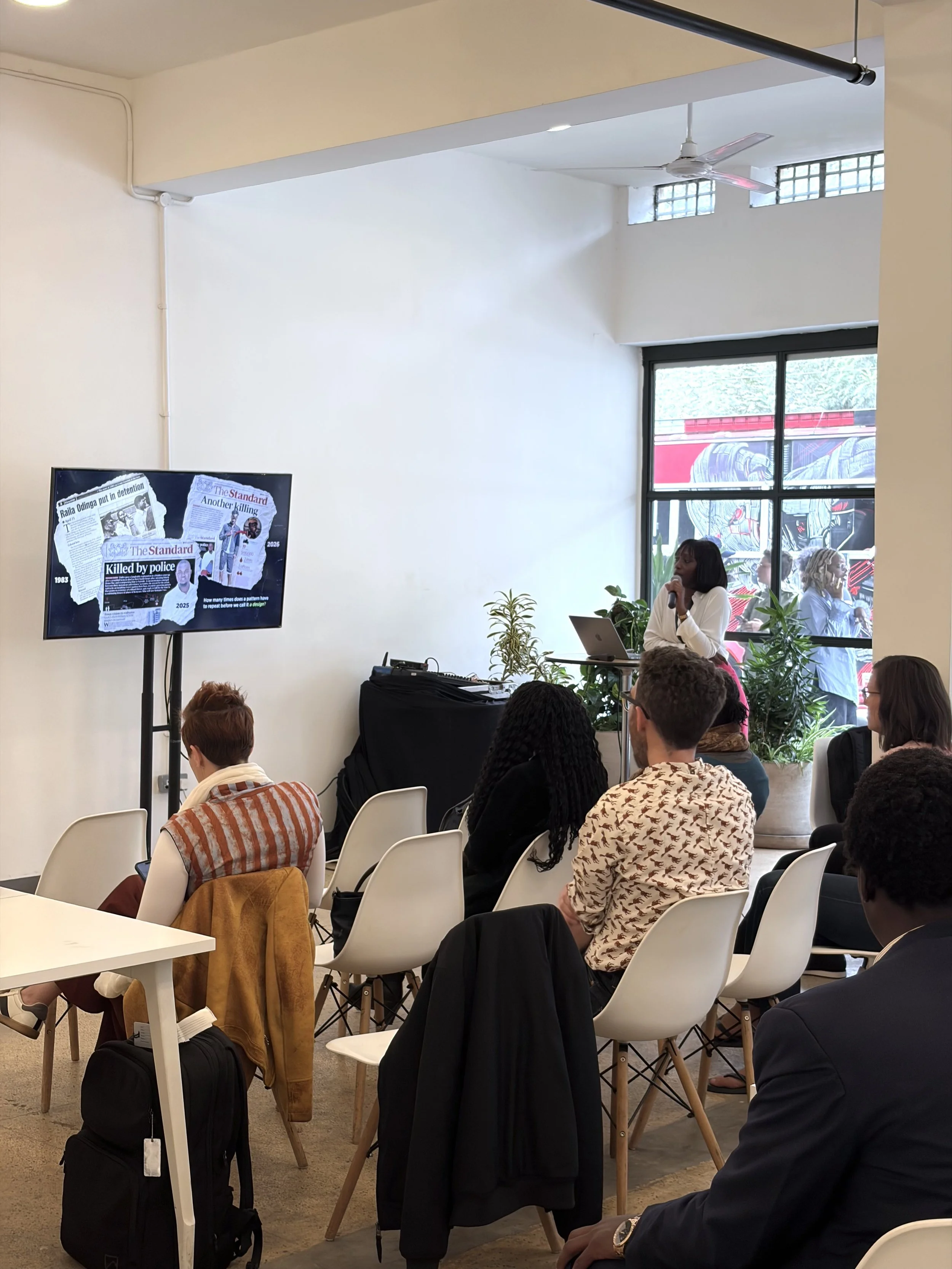
We began with a presentation of our research into the colonial legacy of policing and the inherited design of police stations, asking whether these spaces are indeed fit for the future we want for ourselves. The death of Albert Ojwang in police custody gave these questions renewed urgency.
We considered the varied experiences of those who use these spaces: officers, whose workplaces should support the very difficult work of law and order without compromising their wellbeing; victims and witnesses of all ages and genders seeking help; and the accused, whose dignity and presumption of innocence must also be upheld. If policing is a public service, and the presumption of innocence is a principle of law, why are the spaces in which it happens so often adverse to human wellbeing? Why do they seem to punish and diminish the dignity of the people who use them?
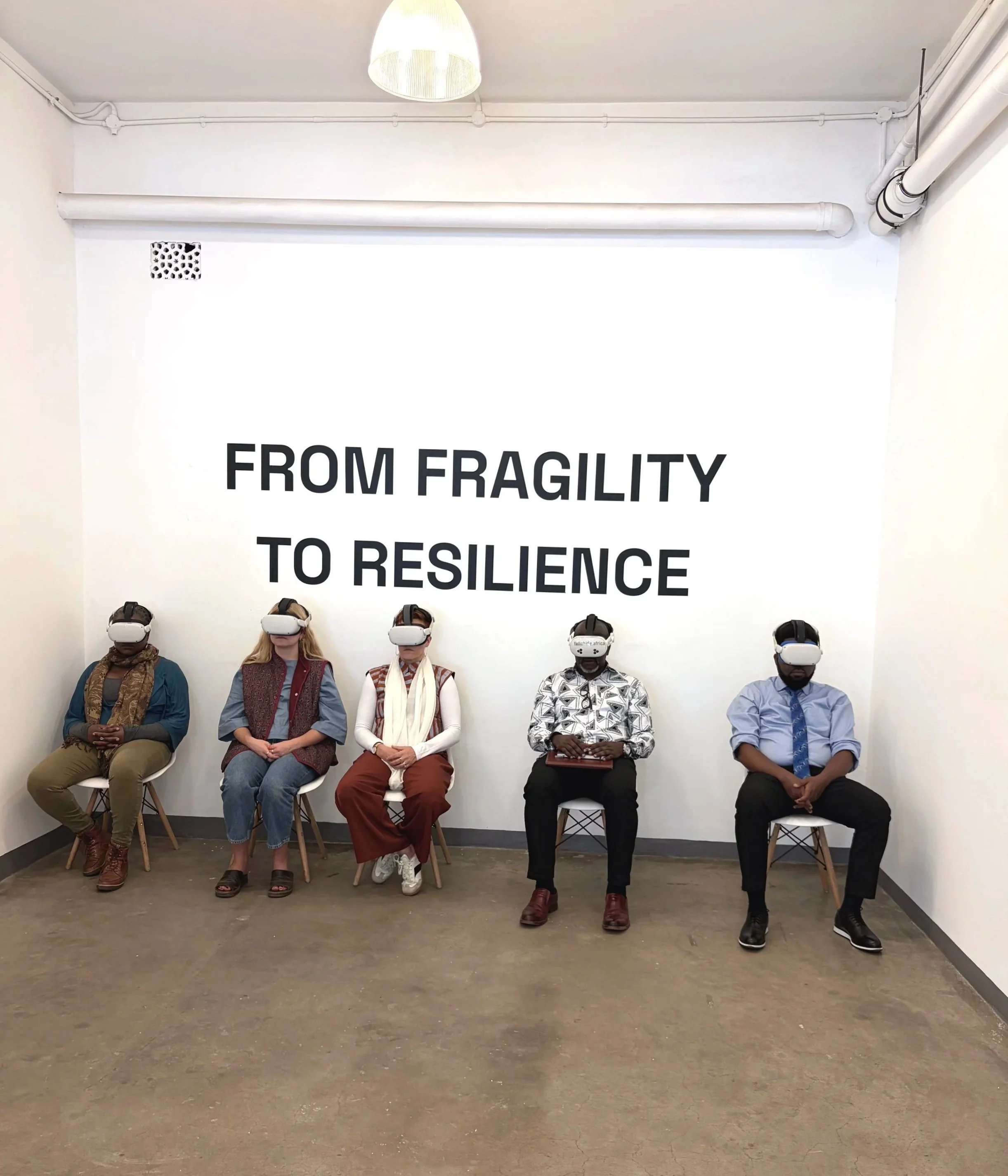
Immersive VR experience
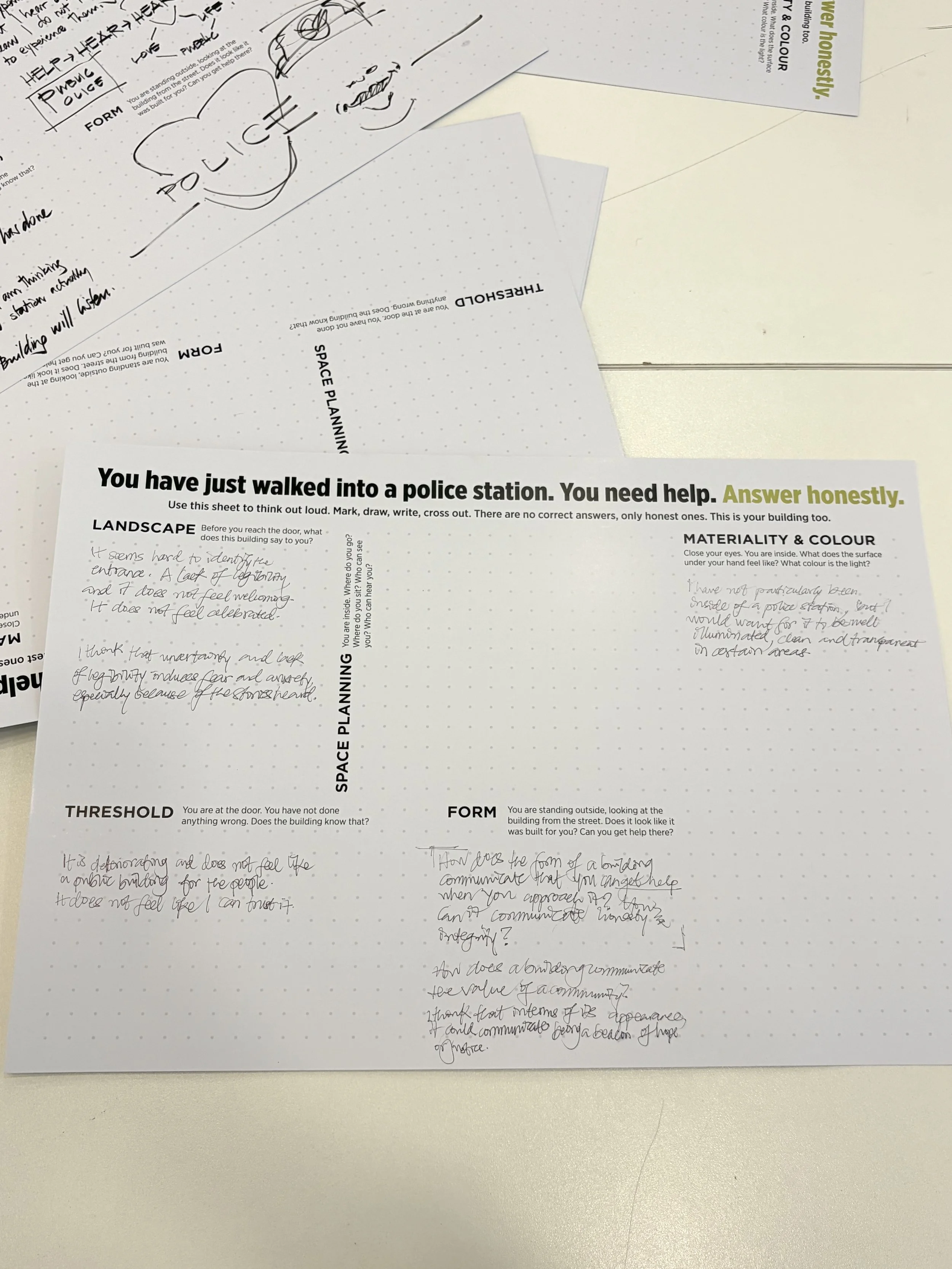
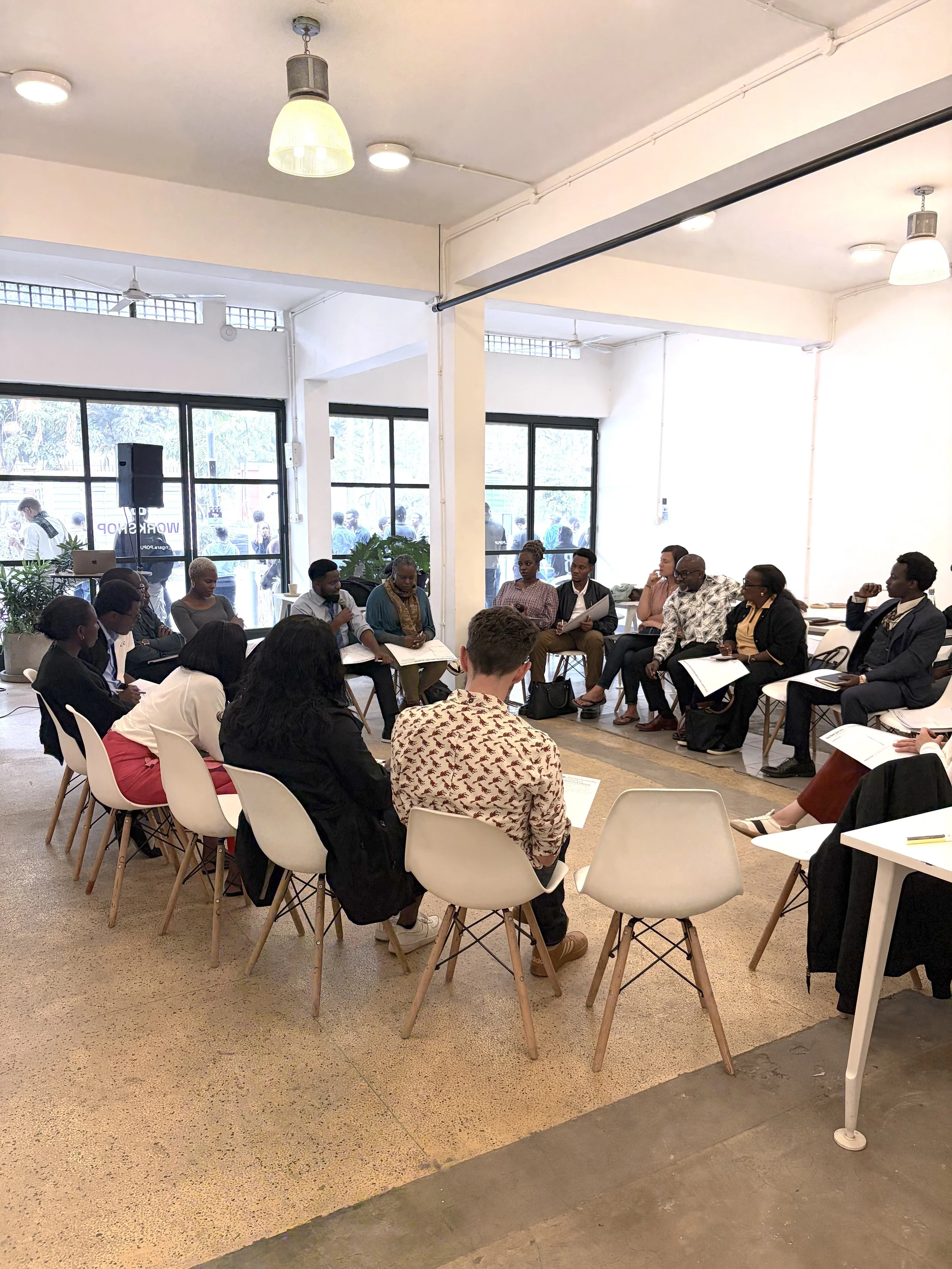
After the presentation, we introduced an immersive VR experience of a reimagined station. We chose VR to test the idea experientially because emotions are part of how we experience architecture, and immersion allows people to feel a space rather than simply look at drawings of it. Following the experience, we used a design worksheet to explore how layout, form, colour, materials and light can be used to create more humane environments. We ended with a kamukunji, a round-table conversation, on how we feel in and about these spaces, why we as Africans sometimes do not feel entitled to beauty, and why beauty might be what helps us cope with life.
Architecture cannot resolve the failures of policing or replace institutional accountability. But the environments in which institutions operate shape encounters and communicate how much value is placed on those who enter them. Beauty, in this context, is no indulgence, though we are often taught to treat it as one. It can be a way of expressing care and restoring dignity.
This was a first exploration, not a set of answers. The strong reactions to the VR experience and the conversations that followed left us with more questions about identity, institutional memory and the possibilities of African public architecture.
What might it mean to remake the spaces through which we encounter the state, so that they hold dignity, express care and reflect who we are, and, in doing so, change the nature of that encounter?
We intend to continue this conversation.